3D Printed Lab Models Houston for Classroom Precision
Order 3d printed lab models houston from Fusion Dynamix for hand-checked lab-grade prints that arrive ready for classroom demonstrations in 3–7 business days.
3D Printed Lab Models Houston for Classroom Precision
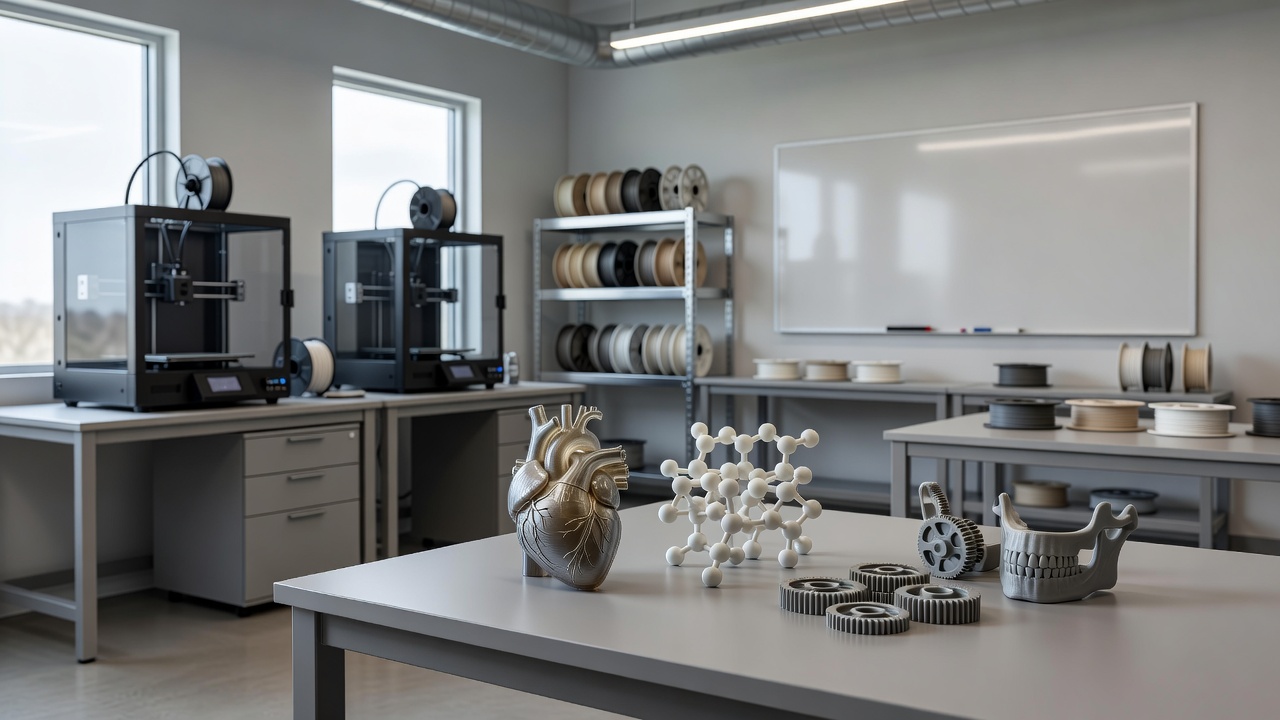
You need models that match exact specifications without delays or defects. Fusion Dynamix produces 3d printed lab models houston in a small-batch studio and ships them ready for immediate classroom use.
Key takeaways:
- Every model receives hand-checked quality before packing.
- Prints ship from Houston, TX in 3–7 business days.
- Custom commissions allow precise scale and material choices.
- Lab-grade prints support demonstrations across multiple disciplines.
- Hand-checked quality ensures no defects reach the classroom.
- Premium finish reduces preparation time for instructors.
Benefits of Precision Builds for Education
Precision builds deliver consistent dimensions that align with lesson plans. You receive parts that fit together without additional sanding or adjustments. These builds also maintain accuracy across repeated print runs when reorders are needed.
- Reduced preparation time before each class session.
- Consistent results across multiple student groups.
- Clear labeling options added during production.
- Durable finishes that withstand repeated handling.
- Accurate representations of molecular structures or equipment.
- Support for both static displays and functional mechanisms.
- Compatibility with standard lab storage systems.
- Options for color coding that matches textbook diagrams.
These advantages help instructors focus on teaching rather than troubleshooting equipment. Custom commissions let you specify exact tolerances upfront.
Lab Prints for Education: Precision Models from Houston
Lab prints for education show how custom orders meet specific curriculum needs. Fusion Dynamix works with you to define layer height and infill levels that match the required strength. Instructors often request models that replicate real equipment proportions so students can practice measurements directly.
Steps to Request a Custom Commission
- Submit dimensions and any reference drawings.
- Select material and finish preferences.
- Receive a same-day quote with turnaround estimate.
- Approve the design for production.
- Track the shipment once it leaves the Houston studio.
- Confirm receipt and inspect for classroom readiness.
Materials Commonly Used
- PLA for lightweight display models.
- PETG for parts exposed to moisture.
- ABS for higher temperature resistance.
- Nylon blends for flexible joints.
- Polycarbonate for impact-prone fixtures.
Comparison of Model Types
Different classroom needs call for different build approaches. The table below outlines common options.
| Model Type | Typical Use | Build Time | Durability | Finish Level |
|---|---|---|---|---|
| Static fixtures | Equipment replicas | 2–4 days | High | Smooth |
| Articulated assemblies | Mechanism demos | 3–5 days | Medium | Matte |
| Sectioned views | Internal structures | 4–6 days | High | Textured |
| Scale equipment | Full-size teaching aids | 5–7 days | Very high | Painted accents |
Trade-offs appear in build time versus durability. Static fixtures finish fastest yet offer the longest classroom lifespan when made from higher-density infill.
Lab Experiment 3D Prints for Precise Houston Setups
Lab experiment 3d prints support repeatable experiments. Each piece is checked by hand to confirm tolerances before shipping. Instructors report fewer setup errors when models arrive with integrated measurement markings.
Checklist for Classroom Readiness
- Verify scale against lesson diagrams.
- Confirm color coding matches your notes.
- Inspect surface for any print artifacts.
- Test fit of moving parts if applicable.
- Store in the provided packaging until use.
- Label storage bins with model names for quick retrieval.
- Rotate stock to prevent dust accumulation on unused pieces.
Precision Lab Fixtures: Custom Orders from Houston Studio
Precision lab fixtures allow instructors to replace broken or outdated components quickly. Fusion Dynamix maintains records of previous orders for consistent reorders. This approach proves useful when a department expands and needs matching sets for additional stations.
- Request matching sets for multiple lab stations.
- Add mounting holes or slots during design.
- Choose neutral colors that suit any workspace.
- Specify reinforcement ribs for high-use items.
Scale Considerations for Accurate Demonstrations
Choosing the correct scale prevents distortion during demonstrations. Choosing scale for 3D printed figures in Houston guides decisions on proportion and visibility from the back of a classroom. Larger scales work best for group viewing while smaller scales fit individual workstations.
- 1:1 scale suits full-size tool replicas.
- 1:2 scale balances detail with storage space.
- 1:4 scale fits most desk setups.
- 1:10 scale supports molecular or cellular models.
- Test scale against projector magnification needs.
Layer height choices affect visible detail at each scale. Lower layer heights produce smoother curves on curved surfaces such as beakers or flasks.
Applications Across Science Disciplines
Different subjects benefit from tailored model features. Biology classes often request sectioned cell models with removable organelles. Chemistry instructors prefer molecular kits that snap together for bond-angle practice. Physics demonstrations use pulley systems or gear assemblies printed at consistent ratios.
- Biology: cell cross-sections and organ models.
- Chemistry: atom connectors and reaction vessels.
- Physics: lever arms and inclined planes.
- Earth science: topographic maps and crystal lattices.
- Engineering: bridge trusses and gear trains.
Each discipline gains from the same hand-checked quality process. Fusion Dynamix adjusts infill based on expected handling frequency.
Ordering Timeline and Shipping Details
Production begins the same day a quote is approved. Every print ships from Houston, TX with tracking and arrives within 3–7 business days. Rush options exist for urgent semester starts when inventory runs low.
Do and Do Not List
- Do provide exact measurements in the first inquiry.
- Do request material samples when color accuracy matters.
- Do schedule reorders two weeks before semester changes.
- Do review tolerance notes before approving designs.
- Do not assume overseas production timelines apply.
- Do not expect mass-produced uniformity in small-batch work.
Additional Resources on Standards
Reference materials from recognized organizations help validate model specifications. NIST guidelines on additive manufacturing outline measurement practices useful for educational models. NIH laboratory safety resources cover handling considerations for printed parts in teaching environments. ASTM standards for polymers provide guidance on material selection for repeated classroom use. EPA chemical safety factsheets address storage of printed components near reagents.
Next Steps
- Visit https://fusiondynamix.shop to start a custom quote.
- Prepare your specifications and any reference images.
- Schedule delivery at least one week before the first class.
- Request a follow-up order once the initial models prove effective.
- Compare material samples before large department purchases.
Fusion Dynamix turns ideas into reality—one 3D print at a time.
FAQ
How long does production take for 3d printed lab models houston?
Most orders complete in 3–7 business days including hand-checked quality inspection and packing.
Can I request changes after the initial quote?
Yes. Contact the studio before production starts to adjust scale, material, or finish details.
What finish level is standard on lab-grade prints?
Each model receives a premium finish suitable for display or active classroom use without further treatment.
Do you offer volume pricing for multiple classroom sets?
Custom commissions allow pricing discussion based on quantity and complexity.
Are the models suitable for high school or university labs?
Yes. Designs match the precision needs of both levels when specifications are provided upfront.