
3D Printed Bookends for Precise Collector Shelves
Learn how 3D printed bookends protect and organize collector shelves. Fusion Dynamix delivers custom options with premium finish made and shipped from Houston
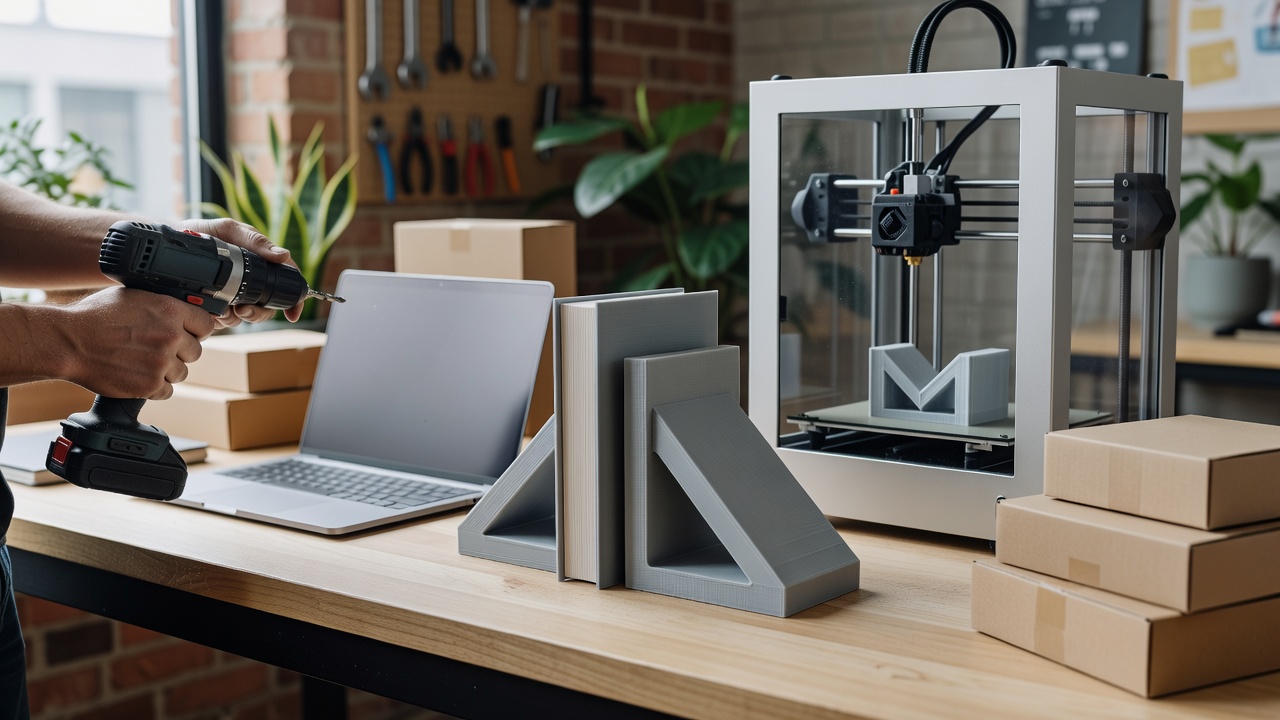
3D Printed Bookends for Precise Collector Shelves
Collector shelves often hold rare editions that need stable support without damage. 3D printed bookends solve this by matching exact shelf dimensions and book weights. Fusion Dynamix creates these pieces in Houston with hand-checked quality for reliable daily use.
You receive prints ready to place on arrival. Each set supports collections of sci-fi volumes, team memorabilia, or lab references without tipping.
Key Takeaways
- Measure shelf gaps and heaviest book weight before ordering.
- Choose infill levels above 20 percent for stability.
- Request custom colors to match existing display themes.
- Verify turnaround stays within 3–7 business days.
- Confirm all prints ship tracked from Houston, TX.
Measuring Your Shelf Space Accurately
Start by recording the distance between shelf supports and the height of the tallest book. Add 2 inches of clearance on each side so the bookend sits flat. Accurate measurements prevent rocking and ensure even pressure across the base.
Next, note the weight range of your heaviest volumes. Prints with 30 percent infill handle up to 15 pounds per side without flex. Collectors who skip this step often discover instability after the first month of use.
Follow these steps to gather complete data before requesting a quote:
- Record exact shelf depth in inches.
- List the three heaviest books by title and weight.
- Photograph the current arrangement for reference.
- Note any wall anchors or lip edges that affect placement.
- Measure clearance above the top book edge.
- Check floor level with a simple bubble tool.
- Note room humidity range if books include paperbacks.
Guidance from the American Library Association on collection shelving helps refine these measurements for long-term preservation. Proper data reduces the chance of returns or adjustments.
Comparing Material and Finish Options
Different filament types affect both appearance and durability. PLA works for light collections while PETG adds impact resistance for frequent handling. ASA resists humidity changes better than standard options.
| Material | Typical Infill | Surface Finish | Weight Capacity | Best For |
|---|---|---|---|---|
| PLA | 20% | Smooth matte | 8 lb | Display only |
| PETG | 25% | Slight sheen | 12 lb | Daily access |
| ASA | 30% | Textured | 15 lb | Humid rooms |
Fusion Dynamix applies a premium finish to every piece before shipping. You choose matte or satin based on room lighting. Review ASTM standards for polymer testing when deciding between options for high-use shelves.
Matching Bookends to Specific Collections
Sports fans pair team-color bookends with sports fan display builds for custom shelves. The same studio produces matching items for consistent shelf themes.
Star Wars collectors select mashup designs that echo star wars mashup figures for collector display cases. These options keep the visual language uniform across the case.
Consider these pairings for different collector types:
- Team logos for game-day rooms.
- Sci-fi emblems for media libraries.
- Lab icons for reference desks.
- Minimal geometric shapes for mixed genres.
- Custom engravings for personal libraries.
- Color-matched bases for holiday displays.
Ordering Process Through a Houston Studio
Submit dimensions and color preferences through the site at Fusion Dynamix. The team replies with a quote and estimated ship date within one business day.
Prints undergo layer inspection and manual sanding before packaging. Every order leaves Houston with tracking information and arrives in 3–7 business days.
Complete these actions in sequence:
- Upload photos of your shelf.
- Select infill and material.
- Approve the digital preview.
- Receive confirmation email with tracking.
- Unpack and position the same day.
- Inspect base pads upon arrival.
Maintaining Printed Bookends Over Time
Dust with a microfiber cloth weekly. Avoid direct sunlight to prevent color fade on PLA pieces. Regular checks extend service life beyond two years for most users.
Check stability every six months by testing the base on a level surface. Replace any piece that shows stress cracks immediately.
Follow this maintenance checklist:
- Store spares in a cool drawer.
- Rotate heavy books to even wear.
- Clean with mild soap only.
- Reapply felt pads when they wear.
- Inspect for layer separation quarterly.
- Wipe bases after any spill.
National Institute of Standards and Technology guidelines on additive manufacturing provide further context on material longevity under repeated loads.
Avoiding Common Placement Errors
Place the bookend flush against the shelf lip rather than centered on the board. This prevents rocking when books shift.
Keep at least one inch between the bookend and the first volume so pages do not catch. Overcrowding causes uneven pressure and shelf bowing.
Avoid these frequent mistakes:
- Never stack books above the bookend height.
- Avoid placing near heat vents.
- Check for warping after seasonal humidity changes.
- Test weight limits before adding new volumes.
- Ignore base leveling on uneven floors.
- Use mismatched pairs on the same shelf.
Evaluating Weight Distribution on Shelves
Even weight distribution protects both the bookend and the shelf itself from long-term stress. Place heavier volumes closer to the center of supported sections and lighter items toward the outer edges.
Test distribution by gently pushing the top book forward after placement. If movement occurs, adjust the bookend angle or increase base width in the next order.
Apply these rules for balanced setups:
- Limit single bookend load to 12 pounds maximum.
- Space multiple bookends no more than 18 inches apart.
- Alternate heavy and light volumes within each section.
- Verify shelf bracket ratings before adding weight.
- Reassess after any collection expansion.
Integrating Bookends With Other Display Items
Pair bookends with articulated figures versus mashups for display cases to create layered visual interest. The bookends anchor the base while figures occupy upper shelves.
Lab professionals combine bookends with 3d printed lab models houston for classroom precision for consistent workspace organization.
Conclusion
Measure your shelf, select the right material, and request a quote from Fusion Dynamix to receive 3D printed bookends that match your collection exactly. Place the order today to keep volumes upright and protected within one week.
FAQ
How long does production take for custom 3D printed bookends?
Fusion Dynamix completes orders in 3–7 business days before shipping from Houston, TX.
What weight can these bookends support?
Most designs handle 8 to 15 pounds per side depending on chosen infill and material.
Can I request specific team colors or sci-fi themes?
Yes. Submit color references or reference images during the quote process for custom matches.
Do the prints arrive ready to use?
Every piece receives a premium finish and ships with protective pads attached.
Where are the bookends made and checked?
All prints are made in-house in Houston, TX and inspected by hand before packaging.