3D Prints for Lab Experiments from Houston Studio
Learn how 3d prints for lab experiments deliver custom fixtures and precision builds. Fusion Dynamix provides hand-checked lab-grade prints made and shipped f
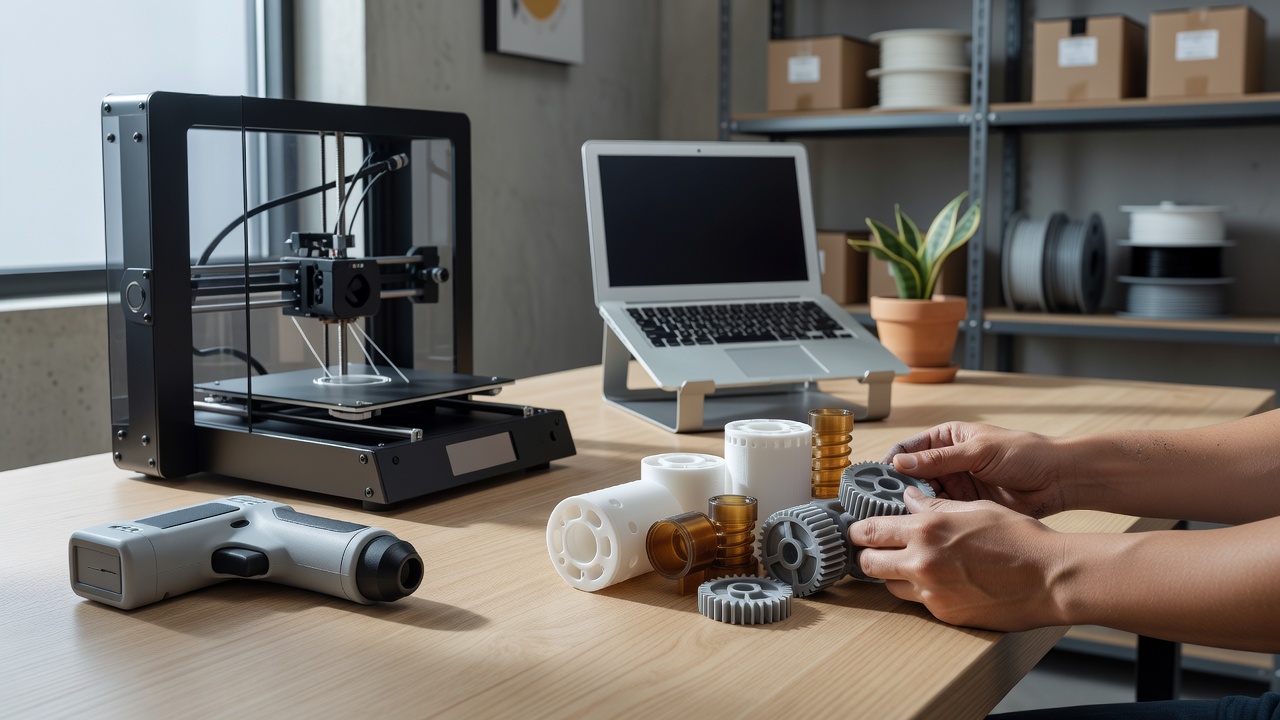
You need reliable fixtures that match exact dimensions for your next protocol. Fusion Dynamix produces 3d prints for lab experiments in a small-batch Houston studio. Each piece receives hand inspection before shipping.
Key takeaways
- Custom lab fixtures reduce setup time compared with off-the-shelf parts.
- Premium finish improves chemical resistance and readability.
- Orders ship from Houston, TX within 3–7 business days.
- Every build is checked by hand for dimensional accuracy.
- Material selection directly affects protocol compatibility and longevity.
Why Lab Professionals Choose Custom Fixtures
Standard equipment often leaves gaps in workflow. Custom 3d prints for lab experiments close those gaps with precise geometry. You receive parts sized to your specific glassware or sensors.
Why Lab Professionals Choose Houston 3D Printed Tools explains common selection criteria used by researchers.
Common Use Cases
- Tube racks for nonstandard vial sizes
- Electrode holders for electrochemical cells
- Sample trays with integrated labels
- Adapter plates for microscope stages
- Clamp mounts for tubing bundles
- Sensor enclosures for environmental monitoring
- Flow diverters for multi-channel assays
Materials That Support Scientific Work
Material choice affects chemical compatibility and temperature range. Fusion Dynamix offers options suited to bench conditions. Selection follows established polymer performance data from sources such as ASTM standards for additive manufacturing.
- PETG for general aqueous solutions
- ASA for UV exposure near windows
- Nylon for flexible clips and hinges
- Polycarbonate for impact resistance
- Specialty filaments with low outgassing
- ABS for cost-sensitive non-critical mounts
- TPU for vibration-damping bases
Quick Comparison of Material Properties
| Material | Chemical Resistance | Max Temp (°C) | Typical Lab Use | Print Time Impact |
|---|---|---|---|---|
| PETG | Good | 70 | Racks and trays | Moderate |
| ASA | Very Good | 85 | Outdoor sensors | Moderate |
| Nylon | Excellent | 80 | Flexible mounts | Longer |
| PC | Good | 110 | High-heat zones | Longer |
Design Guidelines for Reliable Scientific Fixtures
Effective designs balance strength, weight, and print time. Start with functional requirements before adding features.
- Wall thickness of 2–3 mm provides adequate rigidity for most holders.
- Internal infill at 20–40 percent supports moderate loads without excess material.
- Chamfered edges reduce stress concentrations during handling.
- Integrated labeling slots improve sample tracking.
- Mounting holes sized 0.2 mm oversize ease assembly.
Trade-offs in Layer Height Selection
- 0.1 mm layers yield smoother surfaces but increase build duration by 30 percent.
- 0.2 mm layers balance detail and speed for racks and adapters.
- 0.3 mm layers suit internal supports where finish is secondary.
Steps to Request a Custom Commission
Submit your requirements through the studio contact form. Provide drawings or measurements for fastest turnaround.
- List required dimensions and tolerances.
- Note any chemical exposure or temperature limits.
- Specify quantity and finish preference.
- Receive a same-day quote from the Houston team.
- Approve the file and production begins.
- Review digital preview for final confirmation.
Houston Lab Prints vs University Options
University machine shops often carry long wait times. Houston Lab Prints vs University Options: Key Differences compares lead times and finish quality.
- Studio turnaround stays within 3–7 business days.
- Hand-checked inspection occurs before packing.
- Nationwide tracked shipping is included.
- Revisions are handled directly with the same maker.
- No minimum order quantities apply to single-use prototypes.
Precision Builds for Engineering Students
Students need repeatable fixtures for thesis work. Houston Prints for Engineering Students: Custom Solutions shows examples used in university labs.
- Alignment jigs for optical benches
- Flow cells for microfluidics
- Mounts for load cells and strain gauges
- Enclosures for Arduino-based sensors
- Calibration targets for imaging systems
- Custom cuvettes for spectrophotometry
- Vibration isolation platforms
Ensuring Dimensional Accuracy Across Builds
Accuracy depends on printer calibration and post-processing. Fusion Dynamix follows measurement practices aligned with NIST resources on additive manufacturing.
- Verify bed leveling before each run.
- Apply consistent cooling profiles to limit warping.
- Measure critical features with digital calipers after cooling.
- Document deviations for future file adjustments.
- Maintain filament dryness to avoid dimensional drift.
Checklist for Accuracy Verification
- Confirm overall length within 0.3 mm tolerance.
- Check hole diameters with go/no-go pins.
- Inspect flatness on mating surfaces.
- Record surface roughness if required by protocol.
- Test fit with actual components before final use.
Ordering Process and Turnaround
Place orders directly through the studio site at Fusion Dynamix. Production begins the same day payment clears.
- File review within four hours
- Print and post-processing in 2–4 days
- Final hand inspection and packaging
- Shipping label generated with tracking
- Delivery confirmation sent to customer
Conclusion
Custom 3d prints for lab experiments give you control over fixture geometry and surface quality. Start with a quote request that includes your measurements and chemical requirements. The Houston studio will confirm fit and ship within the stated window.
Next steps
- Measure the critical dimensions of your current setup.
- Note any solvents or temperatures involved.
- Visit the contact form and attach sketches.
- Review the returned quote and timeline.
- Approve to begin production.
- Schedule follow-up for any required revisions.
FAQ
How long does production take for lab fixtures?
Most orders complete in 3–7 business days from approval, including hand inspection and packing.
What tolerances can the studio hold?
Layer heights of 0.15 mm and targeted infill produce parts within 0.3 mm of nominal dimensions on most geometries.
Can I request chemical-resistant materials?
Yes. Specify exposure chemicals when requesting a quote so the correct filament is selected.
Are prints suitable for direct contact with samples?
Parts receive a premium finish that minimizes surface porosity; confirm compatibility with your protocol before use.
Do you ship outside Texas?
Tracked shipping reaches all U.S. addresses from the Houston studio within standard carrier times.