How to Order 3D Printed Lab Racks from Houston
Learn how to order 3d printed lab racks from Fusion Dynamix in Houston. Receive hand-checked lab-grade prints with premium finish and tracked shipping in 3–7
How to Order 3D Printed Lab Racks from Houston
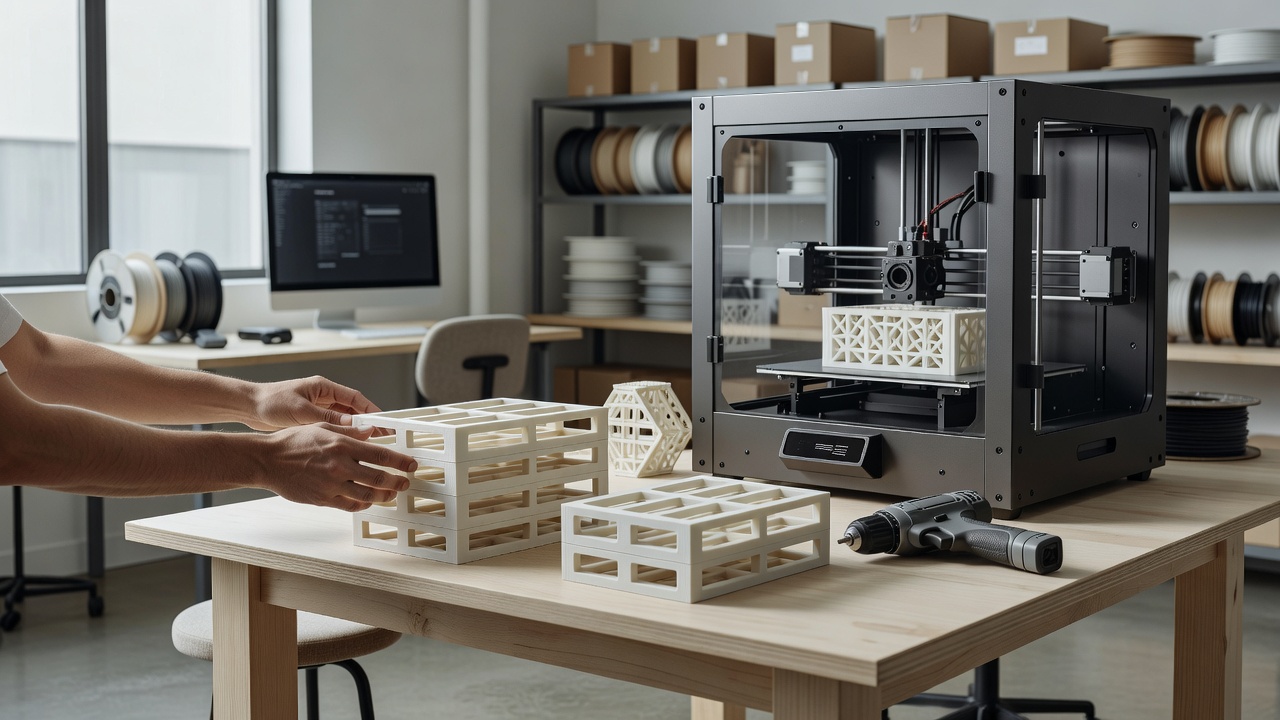
You need reliable lab racks that match exact dimensions and hold equipment without wobble. Fusion Dynamix produces these racks as custom commissions in its Houston studio. Each unit receives a hand check before it ships nationwide in 3–7 business days.
Key takeaways
- Define rack dimensions and load requirements first
- Choose material based on chemical exposure
- Request a same-day quote through the studio
- Confirm finish level for clean-room use
- Verify tracked shipping before checkout
Specify Your Rack Dimensions and Load Needs
Start by measuring the shelf space and listing the items each rack must support. Record heights, widths, and depths in millimeters. Note any required hole patterns or divider slots. Accurate measurements reduce the chance of rework after the first print run.
- Tube racks for 15 mL and 50 mL conical tubes
- Vial racks for 2 mL, 4 mL, and 10 mL glass vials
- Microplate holders for 96-well and 384-well plates
- Pipette tip boxes with 200 µL and 1000 µL positions
- Reagent bottle stands sized for 100 mL to 500 mL containers
- Centrifuge tube holders with 1.5 mL and 2.0 mL slots
- Drying racks for glassware with angled pegs
- Storage racks for magnetic stir bars and spatulas
Send these measurements with your quote request. The studio converts them into a printable model within one business day. This step prevents fit issues once the racks arrive at the bench.
Select Materials for Chemical Compatibility
Different resins and filaments resist solvents, acids, and heat at different rates. Fusion Dynamix offers three standard options for lab use. Review the table with your lab safety officer before final selection. The studio can print test coupons on request so teams can run exposure trials.
| Material | Chemical Resistance | Max Temp (°C) | Surface Finish | Typical Use Case |
|---|---|---|---|---|
| PETG | Good for alcohols and mild acids | 70 | Smooth, low porosity | General bench racks |
| PP | Excellent for bases and some solvents | 100 | Matte | Acid storage stands |
| ASA | UV and weather stable | 85 | Satin | Outdoor or window-adjacent setups |
Consult the chemical compatibility resources from OSHA when evaluating long-term exposure. Higher chemical resistance often trades off against print speed and surface smoothness.
Request a Commission Quote from the Houston Studio
Submit your specifications through the Lab Scientific Commission Quotes process. Include photos of existing racks if you need replacements. The studio replies with pricing and a production timeline the same day. Clear communication at this stage keeps the project on schedule.
Review Print Settings and Layer Quality
Fusion Dynamix prints all lab racks at 0.2 mm layer height with 25 % infill for standard strength. Higher infill or 0.15 mm layers are available for heavier loads. Every rack receives a visual inspection for layer adhesion and edge cleanliness.
- Confirm infill percentage matches expected weight
- Request 100 % infill for centrifuge-adjacent stands
- Ask about support removal marks on underside surfaces
- Verify color choice stays within lab color-coding rules
- Specify wall thickness for racks near heat sources
- Request a sample print of one divider section before full production
These settings balance strength with material use. Thicker walls add rigidity but increase print time by roughly 20 percent.
Compare Standard and Custom Lab Fixtures
Off-the-shelf racks often fail to fit unique equipment. Custom 3d printed lab racks solve these gaps.
- Standard racks ship faster but require adapters
- Custom racks match exact footprints and reduce bench clutter
- Standard racks use generic hole sizes
- Custom racks can include engraved labels or bar codes
- Standard racks arrive in bulk packaging
- Custom racks ship individually wrapped and labeled
- Standard racks limit color options to stock inventory
- Custom racks allow team-specific color coding
3D Printed Lab Models Houston shows similar precision work for classroom use. The comparison helps teams decide when a custom solution justifies the added lead time.
Arrange Tracked Shipping and Delivery
All orders leave the Houston studio with tracking numbers. Delivery reaches most U.S. addresses in 3–7 business days. International orders add customs time.
- Choose ground for cost savings on orders over five racks
- Select priority for next-day needs within Texas
- Add insurance for high-value glassware sets
- Request packing list with itemized dimensions
Fusion Dynamix packs each rack with foam inserts to prevent shifting during transit. This packaging meets common carrier requirements for laboratory equipment.
Integrate Racks into Existing Lab Workflows
Place new racks beside matching Lab Experiment 3D Prints for consistent organization. Update inventory logs with the engraved identifiers supplied by the studio. Consistent placement reduces search time during experiments.
Maintain and Clean Printed Racks
- Wipe with 70 % isopropyl alcohol after each shift
- Avoid prolonged exposure to acetone on PETG units
- Inspect divider slots monthly for wear
- Replace any rack that shows stress cracks
- Store spares in sealed bins to limit dust
- Rotate racks in high-use areas to extend service life
- Document cleaning dates for audit compliance
Regular maintenance keeps printed surfaces free of residue that could affect sample integrity.
Test Rack Performance Before Full Deployment
Before scaling to multiple units, run a two-week trial on the bench. Load the rack with actual equipment and monitor for deflection or tipping. Record any movement under normal workflow conditions. Adjust hole spacing or add feet if stability falls short. This trial phase catches design details that drawings miss. Teams often discover that adding a 2 mm lip improves handling without changing overall dimensions. The studio incorporates these notes into revised models at no extra cost during the initial order window.
Evaluate Long-Term Durability of Printed Racks
Printed racks face repeated handling, solvent contact, and temperature swings. Monitor for color fading or surface crazing after six months. Compare wear patterns against the original material data sheet. Replace units showing visible deformation before they affect workflow safety. Fusion Dynamix offers replacement prints at a reduced rate for existing customers. Tracking durability data helps refine future orders and material choices.
Next Steps
- Measure your current rack gaps today
- Gather chemical compatibility data from your safety sheet
- Submit dimensions to Fusion Dynamix for a same-day quote at https://fusiondynamix.shop
- Approve the model render and select material
- Place the order and note the tracking number
- Schedule a two-week trial once racks arrive
FAQ
What turnaround applies to custom 3d printed lab racks?
Production and hand check take 3–7 business days before shipment from Houston.
Can the studio match existing rack colors?
Yes. Provide a color reference or Pantone code with your order.
Do printed racks withstand autoclave cycles?
ASA and select PP grades tolerate 121 °C steam for limited cycles. Confirm with the studio before ordering.
How are racks packaged for national shipping?
Each rack ships in a labeled box with foam padding and a tracking label.
Are volume discounts available for lab groups?
Custom commissions receive tiered pricing after the first five identical units.