
3D Printed Engineering Prototypes for Houston Testing
Learn how to order 3d printed engineering prototypes from Fusion Dynamix in Houston. Receive precision builds with premium finish and tracked shipping in 3–7
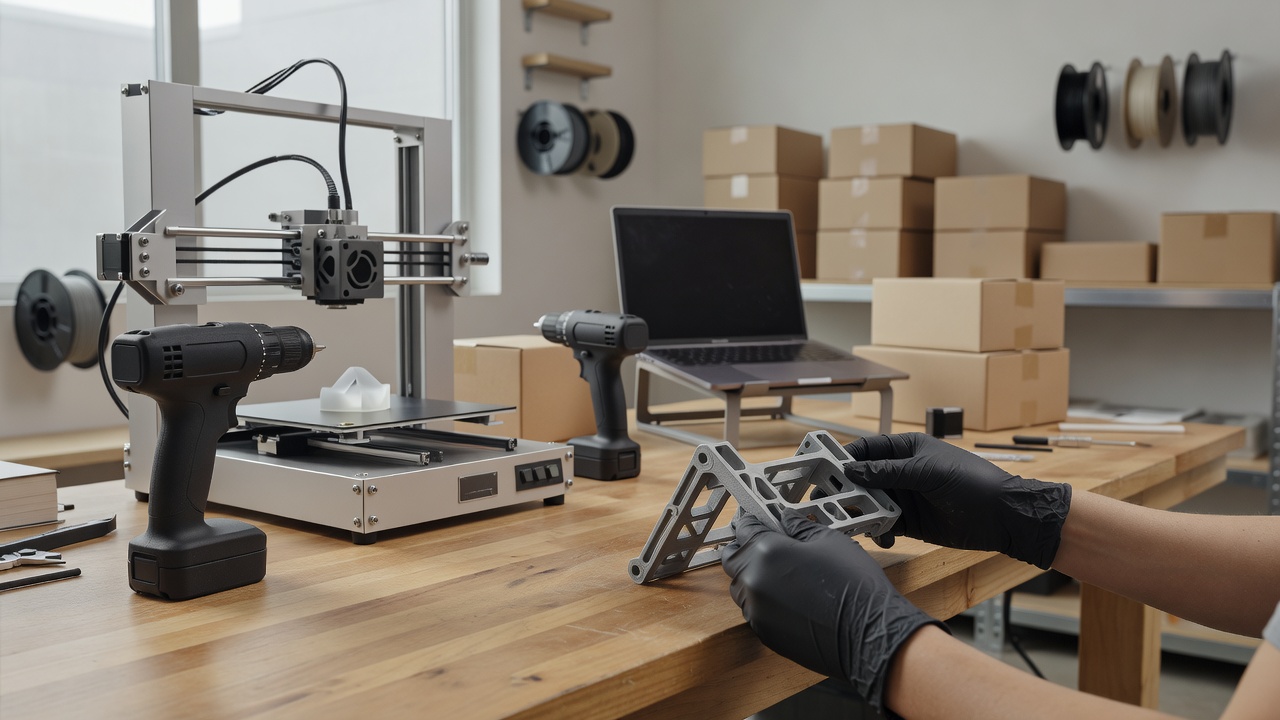
3D Printed Engineering Prototypes for Houston Testing
Engineers often need fast, accurate test parts that match exact specifications before committing to full production runs. Fusion Dynamix produces 3d printed engineering prototypes in Houston that meet these requirements with hand-checked quality and consistent results.
You receive parts made from the correct material and layer settings for your test environment. Every order ships from Houston in 3–7 business days with tracking.
Key Takeaways
- Define tolerances and material needs before requesting a quote.
- Choose layer height and infill based on load and surface requirements.
- Verify fit with a single prototype before scaling to multiple units.
- Request hand inspection notes with each delivery.
- Track shipping status to align test schedules.
Define Your Prototype Requirements First
Start with a clear list of dimensions, load conditions, and environmental factors. This step prevents revisions after the first print arrives. Clear requirements also help the Houston team select the right build orientation and support strategy from the outset.
- Record all critical tolerances in millimeters.
- Note temperature, chemical exposure, or pressure ranges.
- Specify color or surface finish needs for visual checks.
- Identify mounting points or connection features.
- List any required certifications or material data sheets.
Engineers frequently consult NIST guidelines on additive manufacturing when setting tolerance targets for functional parts.
Select Materials for Accurate Test Conditions
Material choice directly affects how closely the prototype behaves like the final part. Fusion Dynamix stocks common engineering resins and filaments suitable for functional testing. Matching the material to the end-use environment reduces the risk of misleading test data.
- PLA for low-load fit checks and quick iterations.
- PETG for improved impact resistance and moisture tolerance.
- Nylon blends for parts that must flex under repeated use.
- ABS for higher temperature exposure during bench tests.
Additional options such as polycarbonate blends become useful when impact and heat resistance must both be evaluated in the same prototype series.
Compare Print Settings and Expected Outcomes
Print parameters control the balance between speed, detail, and mechanical performance. The table below shows common combinations used for engineering prototypes.
| Setting | Typical Use | Surface Quality | Strength Level |
|---|---|---|---|
| 0.1 mm layer | Fine detail parts | High | Medium |
| 0.2 mm layer | General prototypes | Medium | Medium-High |
| 0.3 mm layer | Structural fixtures | Lower | High |
| 20% infill | Lightweight test models | Medium | Low |
| 40% infill | Load-bearing trials | Medium | Medium |
| 60% infill | Repeated cycle tests | Lower | High |
Higher infill percentages increase print time and material use, so many teams begin with 40 percent and adjust after the first functional trial.
Review Industry Standards for Additive Manufacturing Prototypes
Standards help ensure prototypes produce repeatable data that can be compared across design iterations. Fusion Dynamix aligns builds with recognized practices so results remain useful for documentation and regulatory review.
- Confirm layer adhesion meets expected shear values for the chosen material.
- Verify dimensional stability after 24 hours of conditioning.
- Record build orientation and support placement for traceability.
- Apply post-cure or annealing steps only when specified by the test protocol.
- Archive all parameter files alongside test reports.
Reference documents from ASTM International provide detailed test methods that many engineering teams follow when validating printed parts.
Follow the Houston Commission Process
Submit your files through the studio contact form. The team reviews geometry and suggests adjustments for print success. This review often identifies thin walls or unsupported overhangs before production begins.
- Upload STL or STEP files with clear scale references.
- Include a short description of the intended test.
- Receive a same-day quote with lead time confirmation.
- Approve the file before printing begins.
- Track progress through each production stage.
Learn the full workflow in the lab scientific commission quotes step-by-step Houston process.
Verify Fit with University-Style Fixtures
Many labs use 3d printed engineering prototypes as alignment tools or temporary mounts. These parts must hold consistent dimensions across multiple prints. Hand-checking each fixture before shipment supports reliable assembly during your own validation runs.
- Check hole diameters with go/no-go gauges.
- Confirm flatness on a surface plate.
- Test mating surfaces with the actual assembly components.
- Document any deviation greater than 0.2 mm.
See how similar fixtures perform in research settings via the precision 3D printed fixtures for university labs.
Prepare Lab Racks and Models for Repeated Use
Durable racks and demonstration models often start as engineering prototypes. Order these items early so test benches remain organized. Reinforced designs reduce replacement frequency during extended test campaigns.
- Specify wall thickness for shelf loads.
- Add drainage channels where spills may occur.
- Request reinforced corners for frequent handling.
- Include label slots for part identification.
Review ordering steps in the how to order 3D printed lab racks from Houston.
Validate Prototype Accuracy with Measurement Protocols
After delivery, systematic measurement confirms the print meets the original specification. Consistent measurement practices allow direct comparison between successive design revisions.
- Use digital calipers for external dimensions and bore gauges for internal features.
- Perform three measurements per critical dimension and record the average.
- Compare results against the CAD model using the same coordinate system.
- Note any warpage that appears after the part reaches room temperature.
- Photograph each measured feature for the project archive.
- Retain measurement logs with the corresponding print settings file.
Order Classroom Lab Models When Scaling Tests
Once bench tests succeed, classroom versions help train new technicians. These models use the same print parameters for consistency across training and research groups.
- Match scale to existing equipment.
- Add color coding for quick identification during demos.
- Include assembly instructions with each shipment.
- Request spare mounting hardware in the same order.
Next Steps
- Gather drawings and test parameters today.
- Submit files at Fusion Dynamix for a custom quote.
- Schedule your first print run within the 3–7 business day window.
- Inspect the delivered parts against your tolerance list.
- Provide feedback for any follow-up adjustments.
Frequently Asked Questions
What file formats work best for 3d printed engineering prototypes?
STL and STEP files produce reliable results. Include a scale reference in the file name.
How long does a typical prototype take from quote to shipment?
Most orders complete in 3–7 business days after approval. Complex geometries may require an extra day for support removal.
Can I request material test data with my order?
Yes. Provide the resin or filament type when requesting a quote. Fusion Dynamix supplies available data sheets with each batch.
Do you offer revisions after the first print?
Minor dimensional changes are handled as a new print run. Provide updated files and the team will quote the adjustment.
Are parts suitable for outdoor or high-temperature tests?
Select ABS or PETG for elevated temperatures. Confirm your exact conditions during the quote process.