
3D Printed Test Tube Holders: Custom Lab Workflow Guide
Learn how to order 3D printed test tube holders that match your lab workflows. Fusion Dynamix delivers precision builds with premium finish made and shipped f
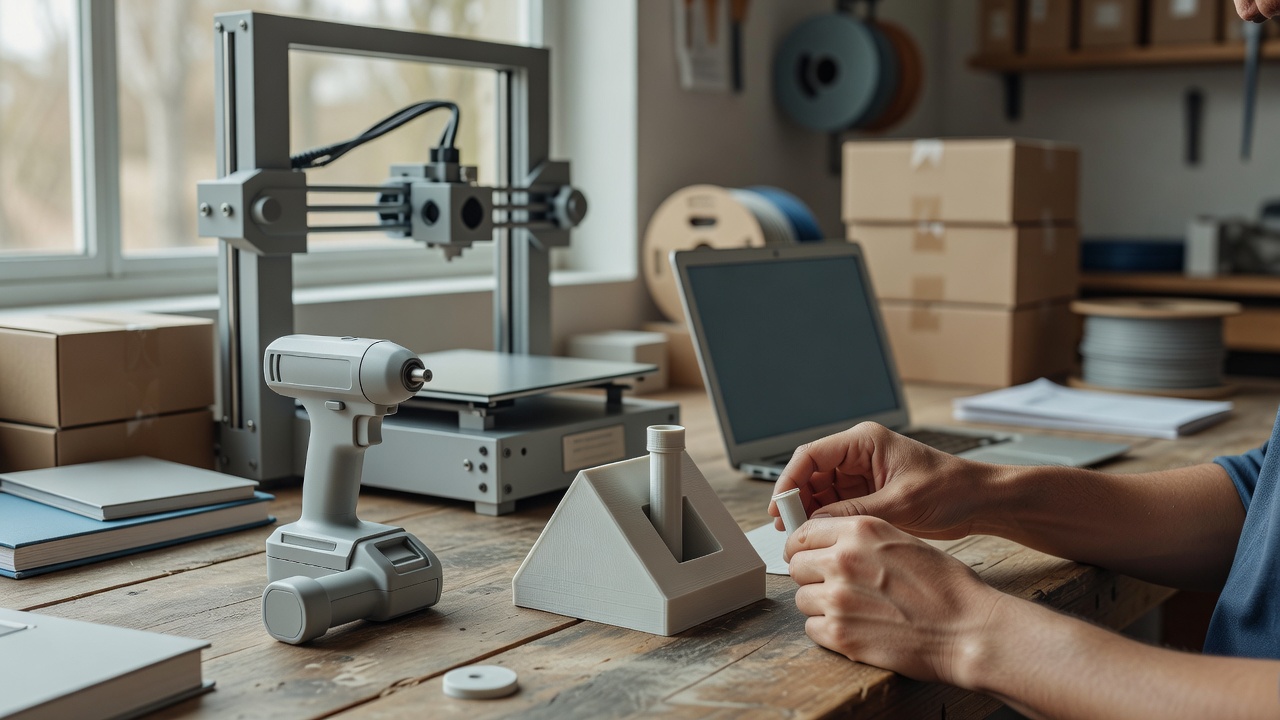
You need test tube holders that fit your exact rack spacing and workflow steps. Custom 3D printed test tube holders solve fit and stability issues that off-the-shelf racks cannot address. Fusion Dynamix produces these holders as lab-grade prints in a Houston studio.
Key takeaways
- Measure rack spacing and tube diameters before ordering
- Choose materials based on chemical exposure and temperature range
- Request hand-checked quality for consistent hole alignment
- Plan for 3–7 business days production plus tracked shipping
- Confirm the holder integrates with existing lab fixtures
Assess Your Current Rack Layout First
Start by recording the exact center-to-center spacing of your racks. Note tube outer diameters and any height restrictions from overhead equipment. These measurements determine hole diameter, wall thickness and base footprint. Accurate data prevents misalignment during daily use and reduces the risk of tube breakage in high-throughput environments.
- Record rack length and width to the nearest millimeter
- Note maximum tube height including caps
- List chemicals that will contact the holder
- Identify required temperature range
- Check clearance above and beside the rack
- Measure vibration levels on the bench surface
- Document any existing labeling system for quick reference
Select Materials for Chemical Resistance
Different resins and filaments handle solvents, acids and heat differently. Fusion Dynamix evaluates each request against your listed chemicals before printing. Material choice also affects long-term durability under repeated cleaning cycles. Consult resources such as the OSHA laboratory safety guidance when evaluating exposure risks.
- PETG offers good resistance to alcohols and mild acids
- Nylon withstands higher temperatures during autoclave cycles
- ABS provides rigidity for larger multi-row holders
- Specialty blends add impact resistance for daily handling
- Consider UV-stabilized options for windowsill storage areas
Add Functional Features During Design
Custom holders can include drainage channels, labeling slots and stackable feet. These details reduce spills and speed inventory checks. Additional options such as modular extensions allow labs to scale capacity without reordering entire sets.
- Drainage slots prevent liquid pooling under tubes
- Side labels allow quick row identification
- Stackable feet keep multiple units stable on benches
- Integrated handles simplify transport between stations
- Angled bases improve visibility of tube contents
- Modular side clips enable row expansion as needed
Customize Holders for Specific Laboratory Applications
Different workflows place unique demands on holders. PCR setups require compact footprints near thermal cyclers, while centrifugation stations need reinforced bases to handle vibration. Fusion Dynamix matches each design to the primary use case so the finished piece performs reliably from day one.
- PCR tube holders use tighter hole tolerances to prevent tipping during transfer
- Centrifuge racks incorporate thicker walls for stability at high speeds
- Sample prep stations benefit from angled rows that speed pipetting
- Storage units add lidded options to protect light-sensitive reagents
- Teaching labs often request color-coded sets for student groups
Follow the Ordering Steps
Submit your measurements and chemical list through the studio contact form. A designer confirms tolerances within one business day. The process includes a digital preview so you can verify every dimension before production starts.
- Provide rack dimensions and tube specifications
- Select material and any added features
- Approve the digital preview file
- Production begins after confirmation
- Each holder receives a hand inspection before packing
- Tracked shipping leaves the Houston studio in 3–7 business days
Compare Holder Types
| Type | Hole Count | Best For | Turnaround | Origin |
|---|---|---|---|---|
| Standard grid | 24 | High-volume racks | 3 days | Made in-house |
| Custom spacing | 12–48 | Irregular tube sizes | 5 days | Made in-house |
| Stackable base | 36 | Multi-level benches | 7 days | Made in-house |
Integrate With Existing Lab Fixtures
Holders must align with adjacent equipment such as centrifuges and pipetting stations. Fusion Dynamix can reference your current setup drawings during design. See the guide on how to order advanced lab fixtures from Houston for compatible mounting options. Proper integration avoids workflow interruptions and keeps benches organized.
- Verify base footprint matches bench cutouts
- Confirm edge clearance for robotic arms
- Match color coding to your lab zone system
Ensure Compliance with Lab Safety Standards
Holders must meet institutional and regulatory expectations for chemical and biological work. Reference the CDC BMBL guidelines on equipment when specifying features that affect containment or decontamination. Fusion Dynamix documents material data so safety officers can approve prints quickly.
- Request autoclavable materials for BSL-2 areas
- Include drainage to support bleach decontamination protocols
- Provide SDS summaries with each shipment
- Verify hole spacing meets secondary containment rules
Avoid Common Specification Errors
Small measurement mistakes lead to loose tubes or jammed racks. Double-check each dimension before approval. Labs that skip this step often face delays when replacements are needed.
- Do not round hole diameters upward
- Confirm tube wall thickness before finalizing inner diameter
- Account for cap height when setting overall holder height
- Test sample tubes in a printed prototype when possible
Source From a Houston Studio
Local production shortens lead times and allows direct communication on tolerances. Every print is checked by hand before it leaves the studio. Houston prints for engineering students show how similar precision builds support lab projects with the same quality standards. This approach also supports rapid revisions if initial samples need adjustment.
Maintain and Replace Holders
Inspect holders monthly for chemical staining or warping. Clean with approved solvents and replace any unit that shows cracks. Routine care extends service life and keeps results consistent across experiments.
- Wipe with 70 percent isopropyl alcohol after each shift
- Store away from direct UV sources
- Order replacements in sets to maintain uniform appearance
- Log inspection dates in the lab equipment database
Next Steps
- Gather rack measurements today
- List chemicals and temperature requirements
- Request a quote at Fusion Dynamix
- Review the preview and approve production
- Schedule installation once the shipment arrives
Frequently Asked Questions
What turnaround time applies to 3D printed test tube holders?
Production and hand inspection take 3–7 business days before tracked shipping begins from Houston, TX.
Which materials suit acid-heavy workflows?
PETG and certain nylon blends resist common laboratory acids. Provide your chemical list for material confirmation.
Can holders match existing rack colors?
Yes. Color matching is available during the design review to align with lab zone coding.
How are dimensions verified before printing?
A designer confirms all measurements against your rack data and supplies a preview file for approval.
Do holders ship ready for immediate use?
Each unit receives a premium finish and hand check. They arrive ready to place on the bench.