Houston Prints for Engineering Students: Project Needs
Houston prints for engineering students deliver custom lab-grade parts and precision models from a Houston studio with 3–7 business days tracked shipping and
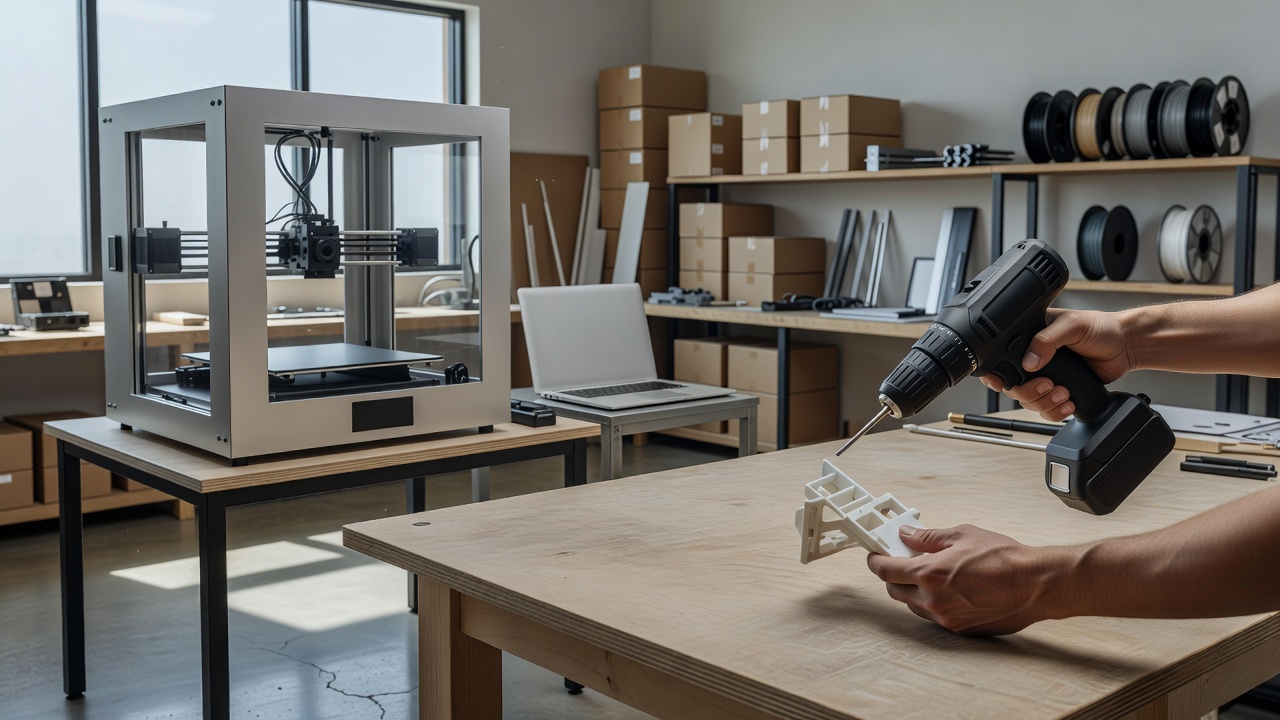
Engineering students often need precise, ready-to-use parts for prototypes and lab fixtures rather than generic options. Houston prints from Fusion Dynamix provide small-batch 3D printing that meets these requirements with premium finish and reliable turnaround.
You can source custom commissions that ship from Houston, TX, in 3–7 business days. Each piece receives hand-checked quality before leaving the studio.
Key Takeaways
- Focus on lab-grade prints suited for research fixtures and student experiments.
- Order precision models with specific layer heights and infill for durability.
- Expect 3–7 business days tracked shipping from the Houston studio.
- Use hand-finished parts that arrive ready for display or immediate lab use.
Why Houston Prints Fit Student Engineering Projects
Students in engineering programs require parts that match exact dimensions for testing and assembly. Houston prints engineering students obtain through Fusion Dynamix meet these needs with custom builds made in-house.
The studio produces lab-grade prints that support experiments without requiring further finishing. This approach reduces delays common with mass options. The National Institute of Standards and Technology offers detailed guidance on additive manufacturing tolerances that aligns with the precision levels achieved in small-batch production.
- Review project specifications before ordering.
- Select materials based on required strength and flexibility.
- Confirm layer height settings for surface detail.
- Verify infill percentage for weight and rigidity.
- Request custom dimensions if standard sizes fall short.
- Document material certifications for academic submissions.
- Test initial samples for fit within existing lab equipment.
Materials and Finishes for Precision Models
Engineering projects benefit from choices that balance detail and strength. Fusion Dynamix offers options suited to functional prototypes and display components. The American Society of Mechanical Engineers maintains resources on material selection for prototypes that help students match filament properties to load requirements.
- PLA for quick concept models with good surface finish.
- PETG for parts exposed to moisture or mild chemicals.
- ABS for higher temperature resistance in lab settings.
- TPU for flexible elements in assemblies.
- Nylon composites for higher tensile strength applications.
- Polycarbonate for impact-resistant housings.
Steps to Order Custom Lab Fixtures
Ordering follows a clear sequence that keeps your timeline on track. Begin with a same-day quote request through the studio.
- Submit your CAD files or sketches with measurements.
- Indicate material and finish preferences.
- Receive a quote within one business day.
- Approve the design for production.
- Track the shipment once it leaves Houston.
- Inspect the received parts against original tolerances.
How to order advanced lab fixtures from Houston outlines additional details for complex fixtures.
Comparison of Print Options for Student Use
Different project types call for different build approaches. The table below shows trade-offs across common categories.
| Project Type | Recommended Material | Typical Layer Height | Infill Range | Best For |
|---|---|---|---|---|
| Lab fixtures | PETG | 0.2 mm | 30–50% | Chemical resistance |
| Precision tools | PLA | 0.15 mm | 20–40% | Detail accuracy |
| Prototypes | ABS | 0.2 mm | 40–60% | Durability testing |
| Display models | PLA | 0.1 mm | 15–30% | Visual presentation |
Common Project Types Served
Fusion Dynamix handles several categories that align with engineering coursework.
- Custom fixtures for fluid dynamics setups.
- Mounting brackets for sensor arrays.
- Enclosures for electronic test rigs.
- Calibration tools for measurement equipment.
- Replacement parts for older lab apparatus.
- Adapter plates for modular test benches.
- Vibration dampeners for sensitive instruments.
3D prints for lab experiments from Houston studio covers examples from recent student commissions.
Turnaround and Shipping Details
Production runs 3–7 business days with tracked shipping included. The Houston studio maintains consistent schedules even during peak academic periods.
- Submit orders early in the week for fastest processing.
- Allow extra time for complex geometries requiring supports.
- Confirm address accuracy to avoid delivery delays.
- Use the tracking link sent at shipment.
- Schedule follow-up prints after initial testing feedback.
Ensuring Hand-Checked Quality
Every print undergoes inspection for layer consistency and surface quality. This step distinguishes small-batch work from automated alternatives.
- Check for uniform wall thickness on arrival.
- Test fit of moving parts before lab use.
- Store prints away from direct sunlight to preserve finish.
- Measure critical dimensions with calipers upon receipt.
How to order precision 3D printed tools for research labs provides further guidance on verification steps.
Best Practices for Integrating Prints into Academic Workflows
Students gain efficiency when prints integrate directly into reports, presentations, and physical experiments. Proper planning prevents rework and supports clear documentation of design iterations.
- Align print orientation with expected load directions during use.
- Include reference marks for assembly alignment in multi-part builds.
- Photograph each print stage for inclusion in lab notebooks.
- Record actual measured dimensions versus nominal values.
- Prepare backup prints for critical components ahead of deadlines.
- Coordinate with lab partners on shared fixture designs.
- Update CAD files based on print feedback before final submissions.
MIT Mechanical Engineering provides open resources on prototyping workflows that complement the hand-checked approach used for Houston prints. These practices help maintain traceability from digital model to physical part.
Evaluating Print Quality for Academic Submissions
Quality evaluation ensures prints meet both functional and grading criteria. Systematic checks reduce the risk of experiment failure due to dimensional errors.
- Compare surface roughness against project requirements using visual standards.
- Verify hole diameters and slot widths with go/no-go gauges.
- Assess interlayer adhesion by applying moderate flex to thin sections.
- Confirm color consistency across multiple parts in a set.
- Document any post-processing steps such as light sanding or annealing.
Conclusion
Select Houston prints when your engineering project demands exact dimensions and reliable delivery. Contact Fusion Dynamix for a same-day quote on your next custom build.
Next Steps
- Prepare your design files with clear tolerances.
- Choose the material that matches your test conditions.
- Request a quote at https://fusiondynamix.shop.
- Review the resulting print against your project checklist.
- Share feedback to refine future orders.
- Archive successful print settings for reuse in future semesters.
FAQ
What file formats work best for engineering prints?
STL and STEP files provide the clearest data for accurate production. Fusion Dynamix accepts both for custom commissions.
How does layer height affect part strength?
Lower layer heights increase detail but can reduce interlayer bonding. Students often select 0.2 mm as a balance for functional parts.
Can prints handle lab chemicals?
PETG and certain resins resist common solvents. Specify your exposure conditions when requesting a quote.
What turnaround applies to rush student projects?
Standard production stays within 3–7 business days. Discuss timelines during the quote process for priority scheduling.
Are nameplates available for lab desks?
Yes. 3D printed nameplates for lab office desks shows ordering steps for identification plates with custom text.