
How Houston Prints Custom Lab Beaker Holders
Learn how to order precision lab beaker holders from a Houston studio. Fusion Dynamix delivers hand-checked custom prints with 3–7 business days tracked shipp
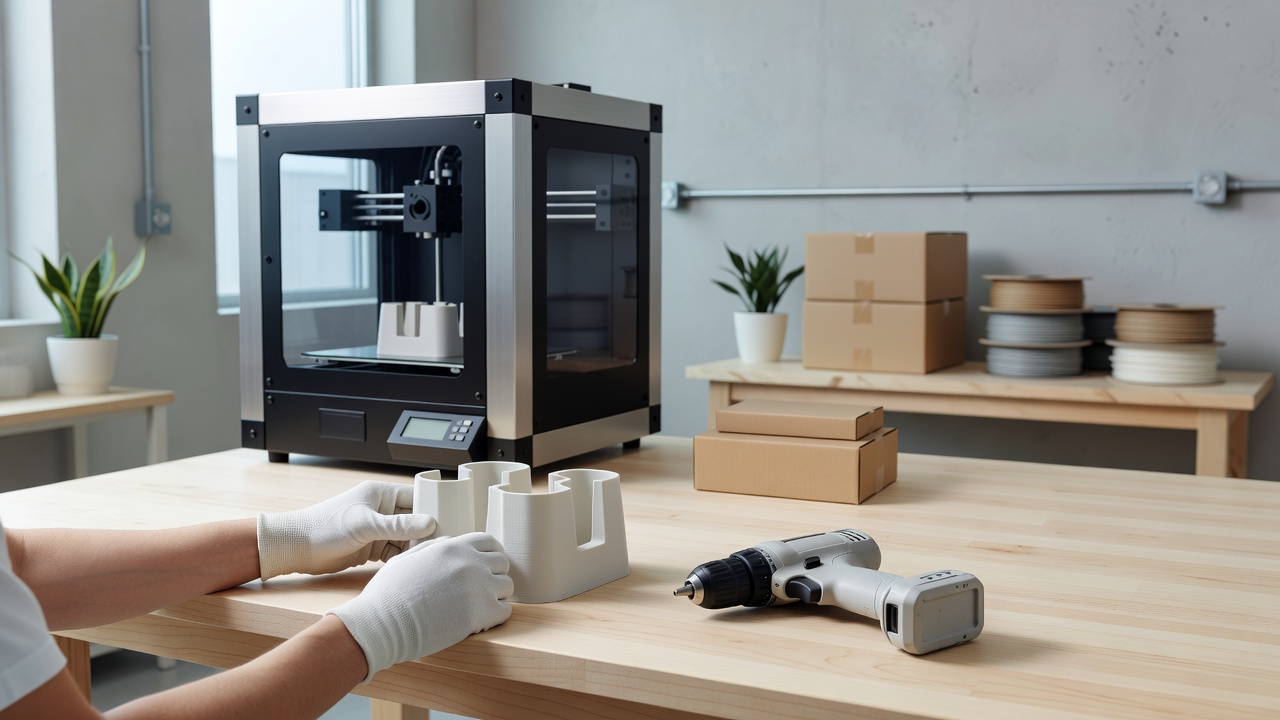
Lab professionals often need fixtures that match exact beaker dimensions and workflow demands. Custom lab beaker holders from a small-batch 3D printing studio address these requirements directly. You receive parts made to order rather than adapted from stock options.
Fusion Dynamix produces these holders in Houston, TX, with every piece checked by hand before shipping. The process starts with your measurements and ends with a ready-to-use item delivered nationwide.
Key takeaways
- Measure beaker diameter, height, and base style before requesting a quote.
- Select materials based on chemical resistance and temperature range.
- Expect 3–7 business days production plus tracked shipping.
- Review similar lab fixtures such as 3D printed test tube holders to refine your design.
Measuring Your Current Lab Setup for Accurate Prints
Accurate measurements prevent fit issues during use. Begin by recording the outer diameter at the widest point of each beaker. Next note the height from base to rim and any taper angles. Small variations in these values can shift the entire fit when the holder reaches the bench.
Use a digital caliper for consistency across multiple units. Record base shape details such as flat, rounded, or footed styles. Photograph each beaker from two angles to accompany the numbers.
- Record outer diameter at three points along the height
- Measure total height including any lid flange
- Note minimum clearance needed around the holder
- Document temperature exposure range during typical runs
- List chemical types that contact the holder surface
- Capture base contour with a quick sketch or photo
- Verify rim thickness if lids will rest on the holder
These seven data points allow the studio to generate a precise model. Engineers at research universities often add one extra measurement for stir-bar clearance when magnetic agitation occurs inside the beaker.
Choosing Materials for Durable Precision Lab Fixtures
Material selection affects chemical compatibility and service life. Standard options include PETG for general use and polypropylene for higher chemical resistance. Each material carries different maximum service temperatures that must align with your protocol.
You can request nylon blends when impact strength matters more than flexibility. ASA offers added UV stability for holders placed near windows or under grow lights. Consult the National Institute of Standards and Technology chemical data before final selection when aggressive solvents appear in daily use.
- PETG: good clarity and moderate chemical resistance
- Polypropylene: high resistance to acids and bases
- Nylon: improved impact strength for repeated handling
- ASA: UV stability for exposed bench areas
- Polycarbonate: higher temperature tolerance in short cycles
Compare these options against your specific reagents before finalizing the order. A mismatch here often leads to surface clouding within weeks.
Specifying Layer Height and Infill for Long-Term Stability
Layer height and infill percentage directly influence rigidity and chemical resistance. A 0.2 mm layer height produces a smoother exterior that resists staining, while 0.3 mm speeds production for less visible surfaces. Infill at 20 percent works for light-duty storage, yet 40 percent or higher prevents flex when multiple beakers sit in a row.
Discuss these parameters with the studio during the quote stage. The team can adjust wall thickness independently of infill to meet load requirements without adding excess weight.
- 0.12 mm layers for display-grade finish on visible edges
- 0.20 mm layers for standard lab balance between speed and surface quality
- 15 percent infill for single-use or low-load applications
- 30 percent infill for daily bench handling
- 50 percent infill when vibration or stacking occurs
- Solid infill only for extreme chemical exposure zones
These choices keep the final part within the 3–7 business days production window while meeting durability targets.
Comparing Holder Designs for Different Beaker Sizes
Different research tasks call for single, row, or modular configurations. A single holder suits benchtop titration setups while row holders organize multiple samples. Modular grids allow future expansion without reordering entire sets.
The table below outlines common trade-offs.
| Design Type | Typical Capacity | Best For | Material Flexibility |
|---|---|---|---|
| Single beaker | 1 unit | Individual assays | All listed materials |
| Linear row | 4–6 units | Parallel sampling | PETG or polypropylene |
| Modular grid | 9–12 units | High-throughput workflows | Nylon or ASA |
Review the compare 3D printed microscope stands article for additional layout ideas that translate to beaker storage.
Requesting a Custom Quote from Fusion Dynamix
Submit measurements and material preferences through the studio contact form. Include any existing part numbers or photos of current fixtures for reference. Clear communication at this stage prevents revision cycles later.
The team responds with a digital preview and estimated cost within one business day. Approved designs move into production immediately.
- Prepare beaker dimensions and photos
- Select primary material and finish level
- Indicate required quantity and delivery date
- Confirm any labeling or color coding needs
- Review the returned preview for dimensional accuracy
- Note any required mounting holes or drainage features
This sequence keeps turnaround within the stated 3–7 business days window.
Integrating Beaker Holders into Daily Research Workflows
Well-designed holders reduce handling time and breakage risk. Place them near the balance or fume hood where beakers are most often filled. Consistent positioning also speeds inventory checks at the end of each shift.
Color coding by reagent type helps prevent cross-contamination during busy periods. Modular designs allow quick reconfiguration when protocols change. Many labs add a small drainage channel at the base to simplify spill cleanup.
- Position holders at consistent bench height to limit reaching
- Label each slot with permanent marker or printed tags
- Store spares in a labeled bin for fast replacement
- Rotate stock weekly to inspect for wear
- Document any observed fit changes after cleaning cycles
- Align drainage features toward the sink edge
Engineering students can explore similar workflow examples in the Houston prints for engineering students guide.
Maintaining Hand-Checked Quality Over Time
Regular inspection preserves performance. Clean holders after each use with the solvent recommended for the chosen material. Follow OSHA laboratory safety guidelines when selecting cleaning agents to protect both the part and the user.
Inspect for surface cracks or warping monthly. Replace any holder that shows deformation before it affects measurement accuracy. Keep a simple log noting date, reagent type, and observed condition.
- Rinse immediately after contact with aggressive reagents
- Air dry completely before storage
- Check slot dimensions against original beaker sample
- Record replacement dates in a lab log
- Schedule quarterly deep-clean with manufacturer-approved solutions
These steps maintain the premium finish delivered from the Houston studio.
Shipping and Turnaround Expectations
Every order ships from Houston, TX, with tracking provided at dispatch. Standard production requires 3–7 business days before the carrier pickup. International destinations add customs time that the studio cannot control.
Rush options exist for time-sensitive grants or equipment installations. Confirm availability when you receive the quote. All packages include insurance for the declared value.
Next steps
- Gather beaker measurements and material requirements today.
- Submit details through the Fusion Dynamix site for a same-day custom quote.
- Compare your list against the test tube holder workflow guide for additional ideas.
- Schedule production once the preview receives approval.
- Verify chemical compatibility using external laboratory resources before ordering.
Frequently asked questions
What file formats does the studio accept for custom designs?
STL and STEP files work best. The team can also start from hand sketches or reference photos when no digital model exists.
How does hand-checked quality differ from automated inspection?
Each holder undergoes manual measurement against the approved dimensions and visual review under magnification before packaging.
Can holders accommodate beakers with magnetic stir bars attached?
Yes. Provide the combined height and diameter during the quote request so clearance is built into the model.
What is the typical lifespan of a PETG lab beaker holder?
With proper cleaning, PETG holders maintain dimensional stability for 18–24 months under standard lab conditions.
Are rush orders available for grant deadlines?
Rush production can reduce the 3–7 business days window when capacity allows. Mention the required date when requesting the quote.